



Designing Dynamic Public Spaces with Kinetic Installations
Public space has become one of the most strategic components of contemporary urban development. For cities competing for tourism, investment and talent, plazas, waterfront promenades and cultural districts are no longer designed simply as circulation areas between buildings. They are expected to function as destinations—places people deliberately choose to visit, photograph and remember.
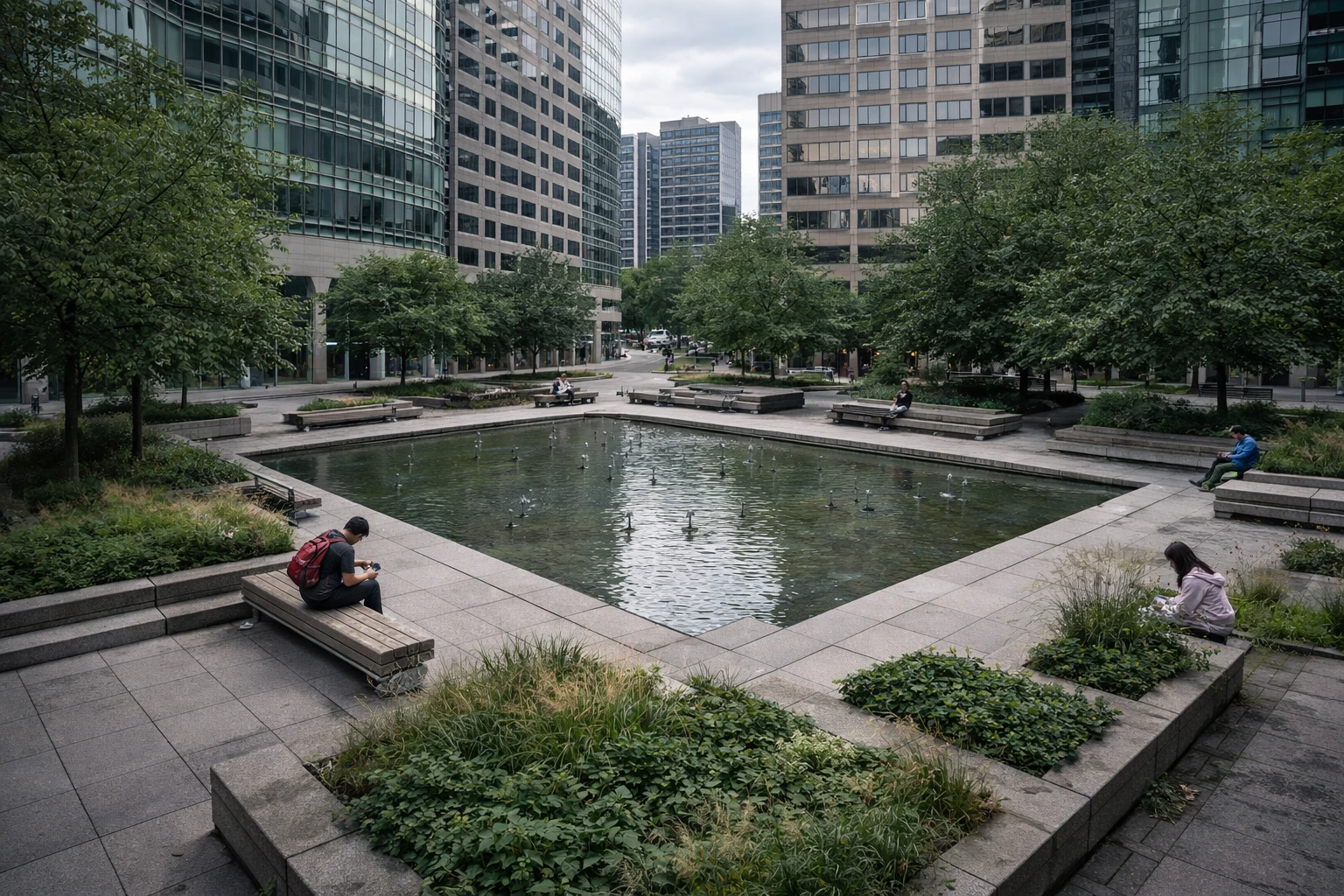
Yet many newly built public spaces struggle to achieve this goal. Despite ambitious architecture and carefully designed landscapes, large plazas often remain visually impressive but socially inactive. Without a strong spatial catalyst, these environments can feel static and interchangeable.
Kinetic Installations offer a compelling response to this challenge. By introducing motion into architectural environments, they transform static spaces into dynamic spatial experiences. Movement attracts attention, creates visual hierarchy and encourages interaction. In recent years, architects and developers have increasingly used kinetic elements as spatial infrastructure within masterplans. Studios specializing in complex moving installations, approach these projects not as decorative artworks but as architectural components that structure how people perceive and inhabit public space.
Why Static Public Spaces Often Fail
Many contemporary urban plazas are designed according to the same formula: a large open surface, surrounding buildings, landscaping and occasional seating areas. While these spaces may appear elegant in architectural renderings, they often lack the spatial energy required to attract long-term public engagement.
Urban design research consistently shows that people are drawn to environments that contain movement, sensory variation and visual focal points. When a space remains visually static, visitors tend to move through it quickly rather than occupy it.
This phenomenon is particularly visible in newly developed mixed-use districts. Developers frequently invest heavily in architecture while underestimating the importance of spatial activation within the public realm.
Kinetic installations introduce a missing layer: motion. Even subtle movement immediately changes how people perceive a space. The human eye is naturally attracted to movement within a static environment, which means a kinetic structure can transform the spatial hierarchy of an entire plaza.
Instead of functioning as empty foregrounds for surrounding buildings, public spaces become environments that actively engage visitors.
Movement as an Architectural Layer
Traditionally, architecture has been associated with permanence. Buildings are designed to maintain their form over decades, while urban planning focuses on long-term spatial stability. Kinetic installations introduce a complementary layer—movement—that operates within this stable architectural framework.
Large suspended kinetic ceilings, rotating facade elements or wind-driven sculptures add visual depth to architectural spaces without altering their structural logic. Motion becomes an additional design dimension.
A well-known example is Kinetic Rain at Singapore Changi Airport, created by Art+Com. The installation consists of 1,216 aluminum droplets, each suspended from individual motors. Together they form choreographed three-dimensional shapes that slowly evolve over time. Installed within a large terminal atrium, the sculpture fills a vertical space more than 7 meters high and has become one of the most recognizable landmarks in the airport.
The installation demonstrates how motion can transform a transitional environment into a memorable spatial experience. What was once simply a retail corridor now functions as a destination where passengers stop, observe and photograph the kinetic choreography.
For architects, this illustrates how movement can operate as an architectural element rather than an applied artwork.
Designing Public Spaces that React to People
One of the most powerful aspects of kinetic installations is their ability to respond to human presence. Advances in sensors, digital control systems and programmable lighting have enabled designers to create installations that react to movement, sound or environmental conditions.
When public space becomes responsive, the relationship between visitors and the environment changes fundamentally. Instead of observing the space from a distance, people become participants in its behavior.
Interactive environments can operate at multiple scales. A ceiling installation may subtly shift patterns when visitors move beneath it. A plaza sculpture might react to wind conditions or pedestrian proximity. These interactions do not need to be dramatic; even subtle responses can create a sense that the environment is alive.
The success of Crown Fountain in Chicago’s Millennium Park illustrates this principle. Completed in 2004 and designed by artist Jaume Plensa, the installation features two 15-meter glass towers displaying video portraits of Chicago residents. Water periodically flows from the towers into a shallow reflecting pool where visitors can walk directly through the fountain.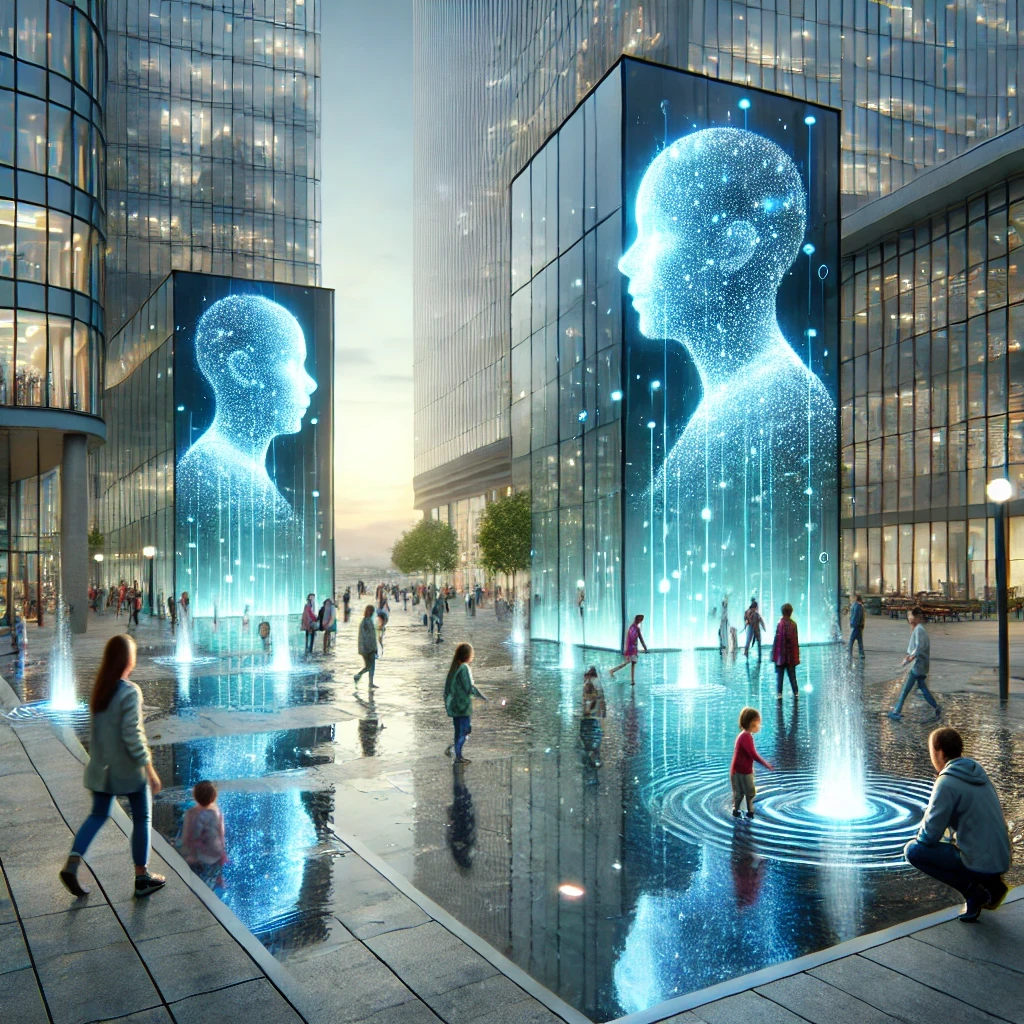
Although located in a civic park rather than a commercial development, the project demonstrates how interactive water installations can transform public behavior. The plaza around the fountain is rarely empty. Instead, it functions as a constantly active environment where visitors gather, interact and spend time.
Urban designers increasingly apply similar principles when designing new public spaces within large developments.
Engineering Motion at Urban Scale
Behind the elegance of kinetic installations lies complex engineering. Motion in public space requires systems capable of operating continuously under changing environmental conditions.
Large installations often involve hundreds or thousands of individual moving components. Motors, cables or articulated joints control movement, while sensors monitor environmental data such as wind speed, temperature or pedestrian activity.
Material selection is critical. Aluminum, stainless steel and composite materials are commonly used because they offer high durability while remaining lightweight. In suspended installations, minimizing weight is essential to reduce structural loads.
Wind-driven installations provide an alternative approach by allowing natural forces to generate movement. A well-known example is Wind Arbor by Ned Kahn at Charlotte Douglas International Airport. The installation consists of more than 4,000 aluminum panels mounted on a frame that responds directly to airflow. Instead of relying on motors, the structure reveals invisible environmental forces through continuous motion.
These engineering strategies allow designers to introduce movement without compromising long-term reliability—an essential requirement for installations located in airports, museums and civic plazas.
Landmark Value and Urban Identity
Cities have always relied on landmarks to structure urban identity. Historically, these landmarks were monuments, towers or significant civic buildings. In contemporary urban environments, kinetic installations increasingly perform a similar role.
Because they move, these installations naturally attract attention. Within a landscape of static buildings, motion becomes a visual signal that draws people toward a particular location.
A striking example is the Brisbane Airport Parking Garage facade, another project by Ned Kahn. The building’s exterior surface is composed of approximately 250,000 lightweight aluminum panels that move with the wind. The facade behaves like a massive kinetic landscape, transforming the entire building into a dynamic visual landmark visible from surrounding roads and runways.
For developers, installations of this kind provide a powerful branding opportunity. Dynamic artworks frequently become the most photographed element of a project, circulating widely on social media and architectural media platforms.
In many cases, the installation becomes more recognizable than the surrounding architecture itself.
Real-World Examples of Kinetic Installations Transforming Public Space
Around the world, several projects demonstrate how kinetic installations reshape public environments.
At Singapore Changi Airport, the previously mentioned Kinetic Rain installation has become one of the most visited interior landmarks of the terminal. Despite occupying a transitional commercial space, the installation attracts thousands of viewers daily and has significantly enhanced the passenger experience within the building.
In the United States, Wind Arbor at Charlotte Douglas International Airport demonstrates how environmental forces can be translated into visual architecture. The constantly shifting aluminum panels transform wind patterns into visible motion, creating an installation that continuously evolves throughout the day.
Large-scale kinetic facades are also transforming architectural identity. The Brisbane Airport kinetic facade extends across the entire parking structure, turning what would otherwise be an ordinary infrastructure building into a memorable architectural feature.
These examples illustrate a broader trend in contemporary design: movement is becoming an integral part of architectural environments rather than an occasional artistic gesture.
The Future of Dynamic Public Space
The increasing presence of kinetic installations reflects a broader shift in urban design thinking. Cities are moving away from purely static environments toward spaces that evolve throughout the day.
Technological advances are accelerating this transformation. Digital fabrication, programmable lighting systems and sensor technologies allow designers to choreograph motion with remarkable precision. Installations can respond to environmental conditions, human activity or programmed sequences that change over time.
At the same time, architects are learning how to integrate kinetic systems more seamlessly into buildings and landscapes. Rather than appearing as separate artworks, these installations are increasingly conceived as part of the architectural structure itself.
For developers, dynamic installations provide a powerful tool for shaping memorable public environments. A well-designed kinetic installation can transform an otherwise ordinary plaza into a destination, increase visitor engagement and strengthen the identity of an entire development.
In contemporary cities, where architecture alone no longer guarantees memorability, movement offers a new dimension of spatial design. By introducing motion into public space, kinetic installations transform static environments into places that evolve, react and remain alive.